
French skincare brand Typology enters Italy after growing customer interest, offering ingredient-focused formulas through its online-first model.
MILAN — Typology’s move into Italy is a measured bet on a market that’s finally ready to buy beauty online. The French skincare brand, founded in early 2019 by serial digital entrepreneur Ning Li, launched there on Wednesday after building a presence in France, Belgium, the U.K., Germany, the U.S. and Japan. Li told WWD the company is choosing markets selectively, rather than trying to expand everywhere at once.
Typology became a leading skincare brand in France during the COVID-19 period. Italy came later, Li said, partly because online shopping was less established when the brand began. “But now everyone shops online, so I think it’s good timing.” The launch also follows strong interest from Italian customers, who were already showing awareness of the brand and its eco-conscious positioning despite Typology having done no local marketing.
A deliberately pared-back proposition
Typology’s appeal rests on a simple pitch in a crowded category: targeted skincare with clearly identified active ingredients and fewer components. The B Corp brand’s range addresses concerns including hydration, signs of aging, sensitivity and scalp imbalances. Its packaging uses mono-materials described as recyclable and recycled.
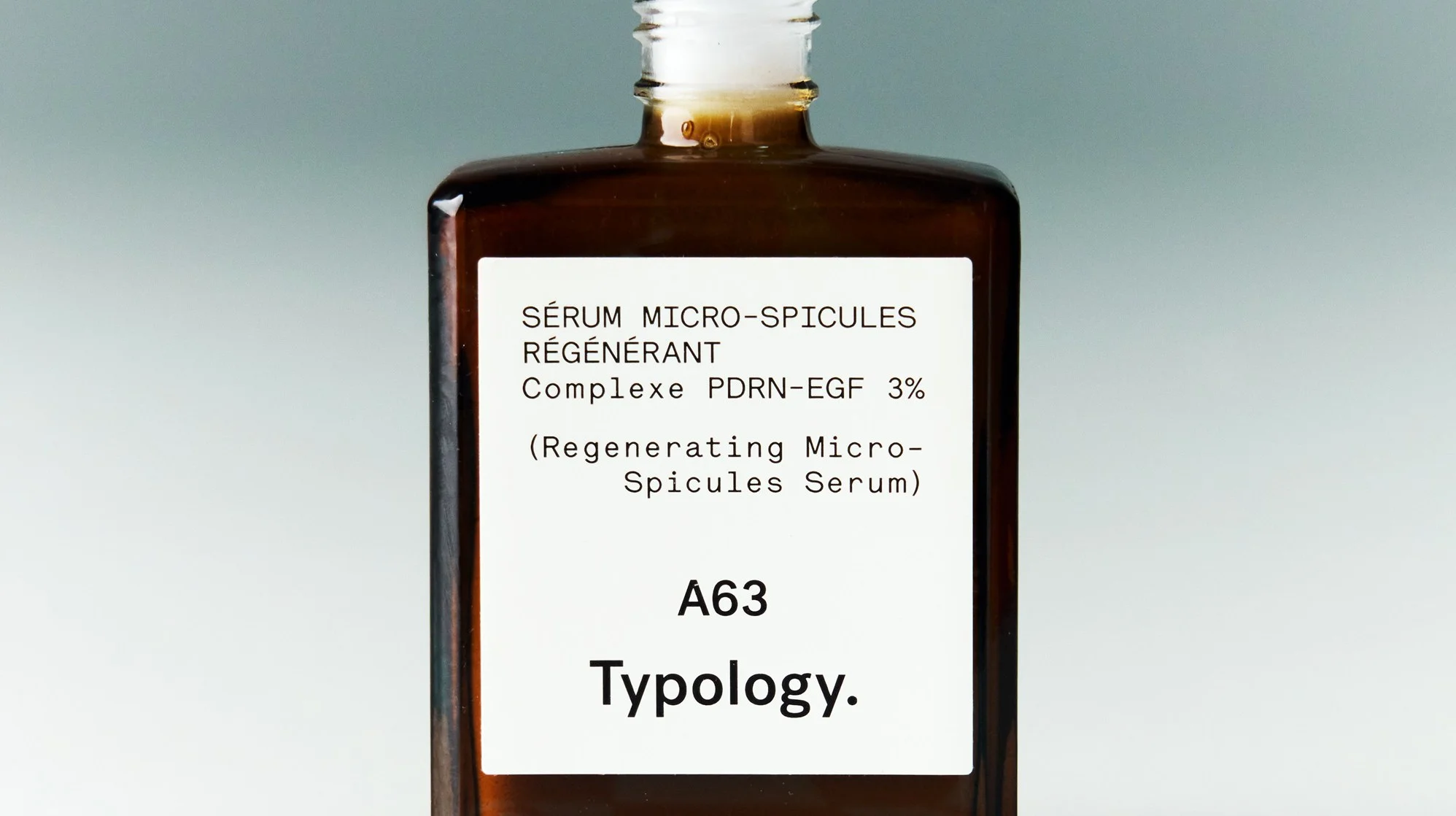
Li argues that restraint matters when consumers face an overloaded beauty market and a constant stream of skincare advice on TikTok. Typology keeps formulas below 20 ingredients, compared with the 30 to 40 he says competitors commonly promote. “Less ingredients also means less ingredients that are problematic for your skin,” he said.
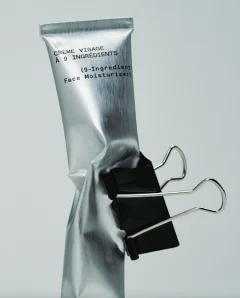
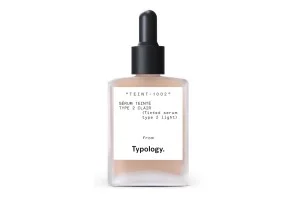
The assortment spans more than 100 products. Two examples are the bestselling 9-Ingredient Face Moisturizer D41 and Tinted Serum T10, which combines vitamin C and aloe vera with color in a lightweight, silicone-free formula.
Different markets, different reasons to buy
Typology’s products don’t land the same way everywhere. U.S. customers tend to favor skincare with quick, visible effects, Li said, helping explain the Tinted Serum’s popularity there. European buyers, in his view, put more weight on skincare itself and are more willing to wait for results. Japan presents a different proposition: shoppers already have access to a mature skincare market and high-quality products, but Typology’s standing in France gives the brand a point of distinction.
After Italy, Li sees potential in the Netherlands and Eastern Europe. Expanding within Europe is comparatively straightforward because the company’s central logistics platform is in France. The U.S. required more groundwork: Typology opened a subsidiary, established a warehouse in Pennsylvania and hired a local team.

Online first, with selective physical experiences
Digital remains Typology’s main sales channel, and Li says that helps keep prices between 15 and 40 euros. He started online partly because it was the channel he knew from earlier ventures in design, MyFab and made.com. But e-commerce doesn’t suit every customer, so the company is testing a limited number of physical locations instead of committing to a broad retail rollout.
One such location is a corner at Printemps Haussmann, opened two years ago. Another route to letting customers try the products is hospitality. As reported, Typology agreed last year to supply amenities to more than 30 MGallery Collection luxury boutique hotels worldwide.
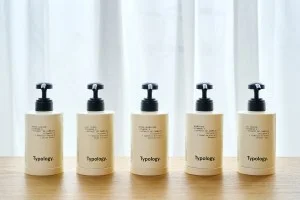
MGallery, part of Accor Group, suits Typology’s positioning, Li said, because its hotels are premium and relatively small. He frames the partnership as a way to build familiarity through an in-person experience, rather than as a direct sales engine. That distinction fits the broader strategy: keep e-commerce at the center, then use carefully chosen physical settings to make the brand tangible.
Typology’s strategy reflects a founder betting that patience can become a brand asset. That’s a meaningful choice in beauty, where promotions can lift sales quickly but may also train customers to wait for a discount. Li says Typology has never discounted a product, prioritizing the brand’s long-term health over quarterly targets. ## A founder building for the long run Li studied at HEC Paris and moved straight into business, founding Myfab before selling it to Kering. He later relocated to London to launch Made.com, an online furniture retailer. Typology is his third company, and he says he’s now more patient than he was with the first two. He remains the company’s majority owner. In 2019, Typology raised a $10 million seed round backed by Xavier Niel, Alven and Firstminute Capital. The business employs 60 people in Paris, where it has an in-house research and development laboratory and offices in the 11th arrondissement. It also works with partner laboratories in Normandy, Provence and Picardy. Li’s interest in beauty began with an ordinary shopping trip after he moved back to Paris from London and became a father. While looking for cream for his newborn daughter, he stopped in a pharmacy and noticed how many products filled the shelves. The number of choices struck him, too. He says that outsider’s view helped push Typology toward digital sales and innovation paired with simplicity.
Discussion
Sign in to join the discussion.