A Munich court found some Skechers step-in sneakers infringe Kizik parent HandsFree Labs’ patent, while rejecting claims against other styles.
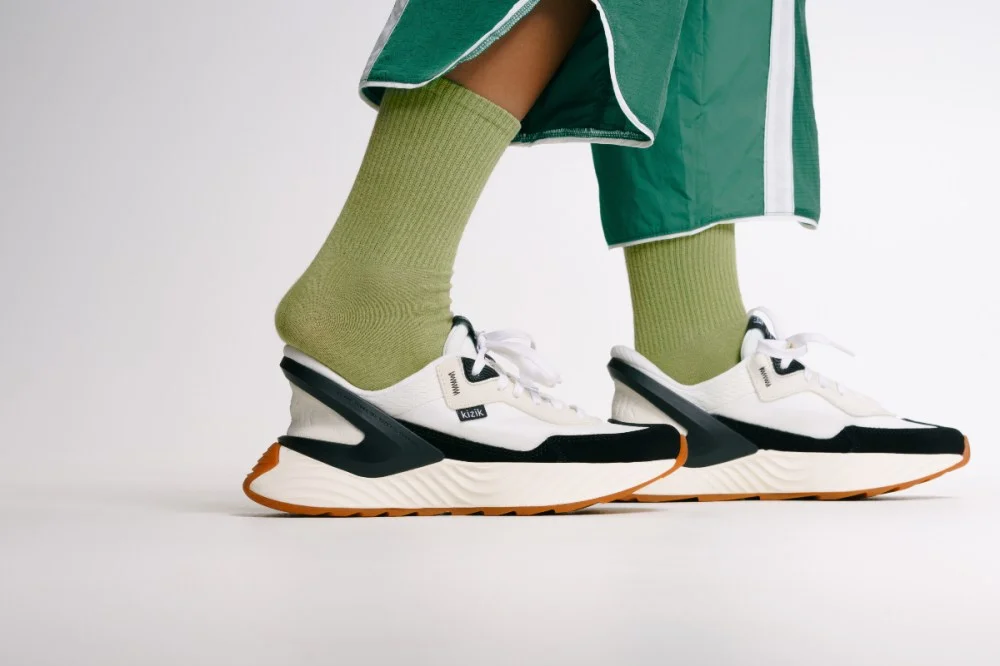
Updated Oct. 21, 2026
A narrow ruling with wider stakes
A Munich court has drawn a narrow line in the patent dispute between Skechers and Kizik parent HandsFree Labs: some Skechers step-in sneakers infringe, but the ruling covers fewer styles than HandsFree Labs challenged. Both companies say the decision supports their position, a familiar feature of disputes where a court’s findings and the scope of its order offer each side different material to emphasize.
On Oct. 17, the Unified Patent Court panel in Munich ruled that certain Skechers shoes infringe a HandsFree Labs patent, according to a copy of the decision reviewed by FN. The order bars Skechers from making, distributing or selling the covered styles in Europe. Its scope is limited to sneakers with elastic side panels and a heel stabilizer; the judges rejected claims involving some other styles named in the complaint.
That distinction matters. A finding against a defined group of products gives HandsFree Labs a legal result it can cite, while the excluded styles give Skechers a basis to argue that the case did not establish infringement across its broader step-in range. The ruling therefore settles part of the dispute while leaving the parties room to contest what the patent covers and how much the decision means commercially.
A limited ruling, two victory claims
The decision applies across the 18 European Union states within the court’s jurisdiction. For HandsFree Labs, the finding validates its patent rights. For Skechers, the limits on the ruling are the central point. The order’s geographic reach is broad, but the product boundary is narrow: it concerns the styles that fit the court’s findings, not every Skechers shoe designed for hands-free entry.
“This shows that the system works,” HandsFree Labs and Kizik chief executive Gareth Hosford said in a statement to FN on Monday. “We’re pleased the court recognized the strength of our patent, and we’ll keep defending the technology our team built.” The statement frames the decision as recognition of the company’s intellectual property and its efforts to protect it. That framing is consistent with HandsFree Labs’ broader argument that its hands-free footwear technology reflects patentable work.
Skechers, in a statement issued Wednesday, said it prevailed on three of the four styles at issue and described the remaining style as “minor and commercially insignificant.” The company also cited the court’s characterization of Kizik’s infringement claims as “largely unfounded.” Those points give Skechers a clear response to the adverse finding: it can acknowledge the order while stressing the number of challenged styles that weren’t covered and the court’s assessment of the claims.
This is more significant than it looks, but the significance is bounded. The ruling gives HandsFree Labs a concrete win on specific shoes; it doesn’t answer every question raised by the companies’ competing accounts of how hands-free footwear technology was developed or whether other products fall within the patent.
The dispute in Europe began in August 2025, when HandsFree Labs’ intellectual property holding company, Fast IP LLC, filed a complaint with the Unified Patent Court in Munich. Skechers’ German, Swiss, Belgian, Italian and French operations were named in the suit. The filing put the disputed amount at a preliminary 1 million euros, a figure the original report described as a likely placeholder for filing purposes. That amount should therefore be read as a procedural figure, not as a measure of the shoes’ sales or the final economic stakes.
The wider patent dispute
The European case followed similar allegations in the United States over hands-free shoe technology. HandsFree Labs filed its U.S. patent infringement suit on July 24, 2025, in federal district court for the Eastern District of Texas. The U.S. case remains ongoing. The two proceedings concern related technology, but the Munich decision doesn’t settle the American case; its claims and outcome will be determined separately.
In its U.S. complaint, HandsFree Labs sought to stop sales of the allegedly infringing shoes in 18 European countries and requested a recall of products placed on the market since July 9, 2025. It also sought provisional damages of 200,000 euros, or $232,694, and additional court penalties under certain circumstances. Those requests describe what the company asked the court to do, not what the Munich panel ultimately ordered. The distinction is easy to lose when allegations and rulings are discussed together.
Hosford has described HandsFree Labs as the holder of more than 200 patents and applications worldwide and said the company intends to defend its hands-free footwear technology. Skechers has countered that the hands-free concept is a “century-old idea” and that its Slip-ins use technology it developed independently. The clash reflects a basic tension in product patents: a general idea may have a long history, while a company may still claim rights in a particular mechanism or implementation. The court’s decision addresses the specific patent and styles before it, rather than resolving that wider argument in the abstract.
Skechers said it has secured more than 140 utility and design patents worldwide. President Michael Greenberg has also said the company has advertised and sold its slip-in shoes since December 2021 without a contract from Kizik. He accused HandsFree Labs of seeking a share of the $9.42 billion acquisition agreement with 3G Capital announced in 2025. Skechers said it would challenge both the validity of the patents and the infringement claims. These are the company’s stated positions; the ongoing U.S. case will provide another forum for testing the competing claims.
What the decision means next
For footwear companies, the dispute illustrates how a product feature can become a point of contention when brands make similar promises to consumers. Hands-free entry is easy to describe at a high level, but patent litigation turns on the details of a claimed invention and the products a court finds relevant. And this is the part most people overlook: a ruling about particular shoe construction doesn’t automatically define the boundaries of an entire product category.
If you’re working in this space, the practical signal is that patent claims can shape which designs a company can sell in a particular market, even when the court rejects claims against other styles in the same case. The immediate effect here is tied to the covered Skechers sneakers and the European court’s order. How the companies respond, and how the U.S. litigation proceeds, will determine whether this remains a focused product dispute or becomes a broader test of their competing patent arguments.
The Munich ruling gives HandsFree Labs a court finding it can point to, but its narrow reach gives Skechers room to emphasize the styles that escaped the order. The numbers here are underwhelming as a measure of the dispute’s scale: the preliminary filing amount doesn’t capture the wider commercial questions, and the decision itself doesn’t resolve the companies’ full disagreement. For now, a limited result. With the U.S. case still active, the next consequential test will be whether the claims hold up beyond this specific group of European sneakers.
Discussion
Sign in to join the discussion.