Walter Mosley’s latest King Oliver novel leads this week’s standout fiction, alongside acclaimed nonfiction on justice, identity and Larry David.
This week’s strongest reviews span Walter Mosley’s jazz inflected crime fiction and Lawrence Wright’s portraits of people on death row. The selections also take up literary culture, friendship, identity and the making of Larry David’s television comedies. Read together, they show critics responding to books that connect private lives with larger systems: cultural status, family ties, criminal justice and public reputation.
Fiction: crime, culture and friendship
Hanging & Burning, Walter Mosley’s fourth King Oliver novel, leads the fiction list with five rave reviews. Donna Seaman of Booklist praises Mosley’s sharp dialogue, vivid character work and command of the absurd, alongside the novel’s attention to jazz, family and crime. That combination gives the book several points of entry: readers can follow the mystery while also watching how artistic identity and family obligations shape the people caught up in it.
The review response suggests that Mosley’s appeal here rests on more than plot. Crime fiction often uses an investigation to expose tensions already present in a community; jazz, with its emphasis on voice and improvisation, offers a fitting frame for a story attentive to character and social ties. The five rave notices mark this as the strongest consensus among the fiction selections.
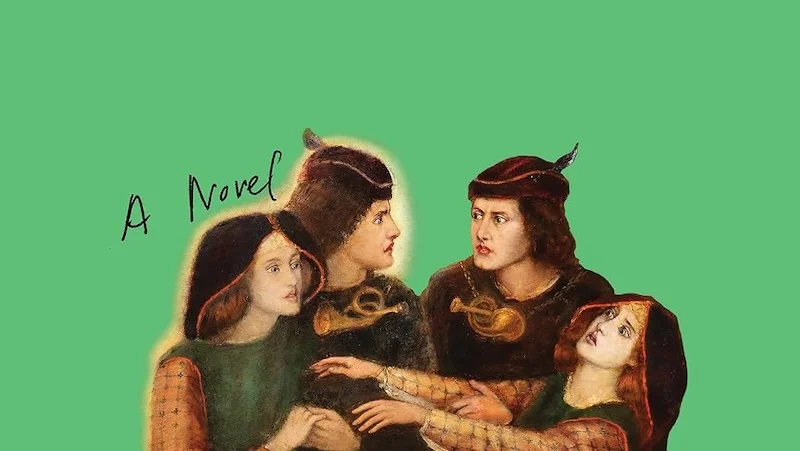
Sam Riviere’s Doppelgänger drew two rave and two positive reviews. Writing in the Financial Times, Matthew Janney says the novel takes aim at capital-C “Culture” while making broader observations about society. Riviere, he argues, makes the book feel singular without falling into the trap of reproducing what it critiques. That distinction matters for a novel concerned with cultural institutions and their language: satire can become an imitation of its target, but Janney’s reading is that Riviere keeps enough distance to make the criticism count.
The split between rave and positive reviews points to a book with a clear subject and a particular approach. Readers interested in how literary culture confers status may find its argument more compelling than those looking for a straightforward narrative. The criticism, as described, depends on the book remaining alert to the habits it wants to question.
Pol Guasch’s Paradise Burns earned two rave reviews and one positive notice. Kirkus highlights the tenderness between Líton and Rita, describing their friendship as a source of support amid despair and calling the novel a perceptive account of friendship. That focus gives the relationship real weight: companionship is not presented as a cure for hardship, but as a way the characters endure it. A small, intimate bond can become the book’s clearest measure of what remains possible.
Lisa Kleypas’s Queen of Lombard Street received one rave and two positive reviews. Kirkus calls the historical novel both carefully researched and entertaining, with romance and economics sharing the stage. The pairing suggests a story where affection develops alongside practical questions of money and social position, rather than floating free of them. Nuzo Onoh’s The Turning of Sally-Mae received one positive and two mixed reviews; Library Journal recommends it to readers of V. Castro’s The Queen of the Cicadas and LaTanya McQueen’s When the Reckoning Comes. That comparison gives readers a useful sense of the book’s likely audience, while the mixed notices signal a less settled critical response.
Nonfiction: overlooked models and personal histories
Lindsey Fitzharris’s Sleuth-Hound: The Case of the Real Sherlock Holmes tops the nonfiction selections with two rave and four positive reviews. The book restores Dr. Joseph Bell—whose observation skills helped inspire Sherlock Holmes—to the center of the detective’s origin story, according to Booklist reviewer David Pitt. The premise shifts attention from the fictional detective to the real person whose methods helped make him imaginable. For readers who know Holmes as a cultural figure, Bell’s role offers a way to reconsider how literary characters draw on people and practices beyond the page.
The review tally is notably strong, though the book’s central claim is also a familiar kind of biographical project: tracing the person behind a famous creation. Its value depends on how carefully that link is drawn. The available praise frames Bell not as a simple one-to-one template, but as a figure whose observational skills belong in a fuller account of Holmes’s beginnings.
Lawrence Wright’s Redemption: Faith, Justice, and Sisterhood on Death Row received three rave reviews, one positive and one mixed. Boston Globe critic Kate Tuttle describes it as a personal work of journalism that challenges assumptions about guilt, justice and change. Its portraits of prisoners and nuns, she writes, are richly observed, making the book well suited to reading in sections. The recommendation points to a work built from individual accounts, where each portrait can be considered on its own before being set against the larger questions the book raises.
This is more significant than it looks: when a book about punishment is organized around people rather than abstractions, it can make familiar arguments harder to dismiss. Wright’s reported approach, as Tuttle describes it, asks readers to hold several questions at once—what justice requires, whether people can change and how faith shapes those judgments. The mixed review in the tally also suggests that the subject or treatment may not persuade every reader equally.
Lisa Hanawalt’s illustrated collection I Can’t Stop Thinking about Horses and Sex earned three rave reviews and one positive. The New York Times Book Review praises the precision beneath its jokes and colorful animal drawings: Hanawalt uses personal, sometimes graphic detail to examine difficult subjects without turning them into a broad philosophical argument. The pairing of absurd imagery with specific experience appears central to the collection’s method. Humor opens the door, but the detail keeps the work from becoming merely a string of jokes.
Zaina Arafat’s Our Arab: On Longing, Belonging, and Hope received two rave reviews and one positive. Publishers Weekly calls the book a powerful examination of the pain experienced by Palestinians living in exile. That description places longing and belonging in the foreground, where identity is shaped by both personal attachment and displacement. The review’s emphasis on pain signals a serious account, rather than a treatment that smooths over the costs of exile.
Blake J. Harris’s Emperor of Nothing: The Making of Larry David rounds out the list with three positive reviews and one mixed. The account traces the creation of David’s two celebrated television comedies. A Wall Street Journal review finds Harris’s portrait lively and intimate, while faulting it for idealizing David and giving little space to his romantic history. That criticism points to a basic tension in biographies of prominent creators: closeness can make a subject vivid, but it can also narrow the view if the account gives too much weight to the subject’s preferred image.
What these books ask readers to notice
Together, the week’s selections favor books that look closely at how people shape one another—through friendship, family, creative work and the stories that define a public figure. They also show different ways writers can connect an individual life to a wider subject, whether that means cultural prestige, the idea of justice or the making of a famous character.
Here's the thing: the strongest reviews don’t all point to the same kind of book. Their common thread is attention to the human detail that gives larger claims their force. If you're working in publishing, criticism or bookselling, that’s a useful signal about what reviewers are rewarding this week: clear perspective, vivid people and an argument grounded in scenes or relationships. And yet, review counts are only a snapshot of critical response. A reader’s choice still depends on whether the book’s subject and approach hold their attention. The connecting idea, in miniature.
Discussion
Sign in to join the discussion.