Zipline’s $1.5 billion funding round supports U.S. manufacturing and hiring as Walmart adds 300 sites to their expanding drone delivery network.
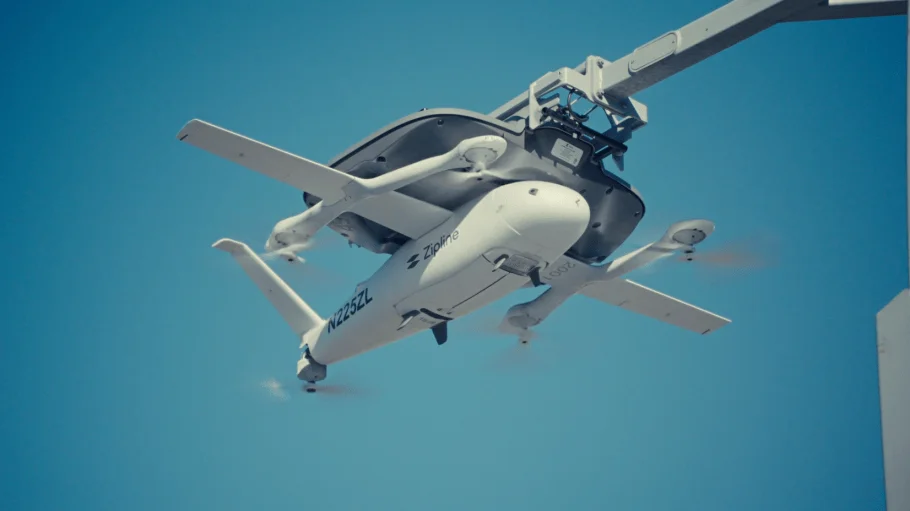
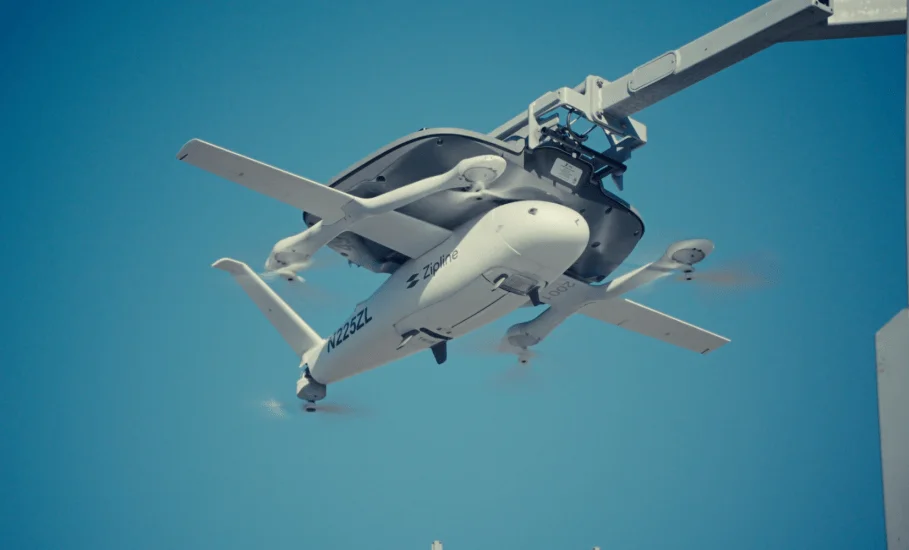
Zipline’s $1.5 billion raise and Walmart’s plan to add 300 delivery sites put the company’s national ambitions on firmer commercial footing. The test ahead is whether it can turn fast service in a handful of markets into a repeatable network across the country.
Capital and a larger retail footprint
The financing values Zipline at $21.5 billion after the investment, up from a $7.85 billion valuation reported earlier this year. The completed round exceeded September reports that the company was discussing roughly $1 billion at a valuation near $20 billion. Paradigm, WCM Investment Management and Layer Global led the raise; Valor, Fidelity, Uber, Tiger Global, J.P. Morgan, ARK Invest and Salesforce Ventures also participated. Paradigm had invested $200 million in March.
Zipline says it will put the money toward expanding U.S. manufacturing and hiring. Walmart’s multi-year agreement adds 300 sites to their delivery network, with room for further expansion. Walmart has completed more than 2 million drone deliveries, the largest retail drone delivery program in the United States, and says 90 percent of Americans live within 10 miles of one of its stores.
The companies began flying together in northwest Arkansas in 2021 and extended service to Dallas-Fort Worth earlier this year. Walmart executive Greg Cathey said customers may first try drone delivery out of curiosity, then return for the convenience of receiving an order in minutes. Zipline CEO Keller Cliffton pointed to the same shift: after five years of joint operations, he said, customers now place orders multiple times a day and can get items in 10 to 30 minutes.
Speed is showing up in delivery data
Dallas-Fort Worth provides the clearest evidence of Zipline’s current operating scale. The company says it completed more than 1 million deliveries there this year. In October, the median order arrived 19 minutes after checkout, compared with more than 30 minutes for conventional delivery.
Zipline also reported rising use among a group of its longest-serving restaurant partners. From March to October, its share of those restaurants’ delivery revenue climbed from 10.8 percent to 34.9 percent, while delivery gross merchandise value rose 26 percent. Zipline attributed 80 percent of that increase to its orders.
There’s a limit to what those figures show: the company says delivery accounts for only 5 percent of U.S. restaurant orders, and most delivery customers live within a couple of miles of a restaurant. The data suggest room to expand, but they come from a still-small slice of the market.
Uber adds another route to scale
Walmart is one anchor for Zipline’s expansion; Uber is another. The companies announced a strategic partnership in August to bring drone delivery to Uber Eats, alongside a separate Uber investment in Zipline. Initial deployments are planned for later this year in markets where Zipline already operates. Their stated target is 1 million drone deliveries a day by the end of 2029, which would require entry into dozens of additional cities beyond Dallas and Houston.
That goal will depend on wider operating access. Zipline says its autonomous aircraft have flown 150 million commercial miles without a safety incident. It currently operates under Part 135 approvals, while the FAA reviews a separate proposal that would authorize up to 220,000 deliveries a day across Houston, San Antonio, Austin, Amarillo and El Paso. In Dallas-Fort Worth, the company is authorized for roughly 30,000 daily deliveries.
The FAA’s proposed Part 108 framework, which would establish routine rules for flights beyond an operator’s line of sight, has been awaiting review at the White House regulatory office since July. That process matters to Zipline’s plans because a larger network requires more than retail sites and aircraft: it also needs permission to operate at scale.
More competitors are building delivery networks
Zipline is expanding as Alphabet’s Wing works with restaurant, retail and healthcare partners, DoorDash develops drone delivery, and Amazon Prime Air expects to serve more than 500 selected markets. Zipline currently operates in Texas, Arkansas and Ohio, and plans to launch in Arizona.
For now, Walmart’s footprint and Zipline’s delivery times offer a credible basis for expansion. The next measure will be how quickly the 300 planned sites become active operations—and whether customers keep ordering once drone delivery stops feeling novel.
Discussion
Sign in to join the discussion.