Discover how Raymond Chandler's iconic works were first received by critics, showcasing the evolution of his celebrated detective fiction.
I was as hollow and empty as the spaces between stars.
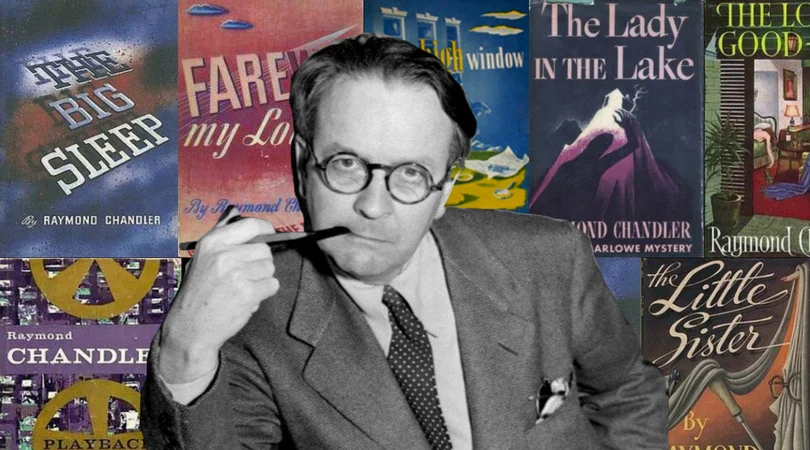
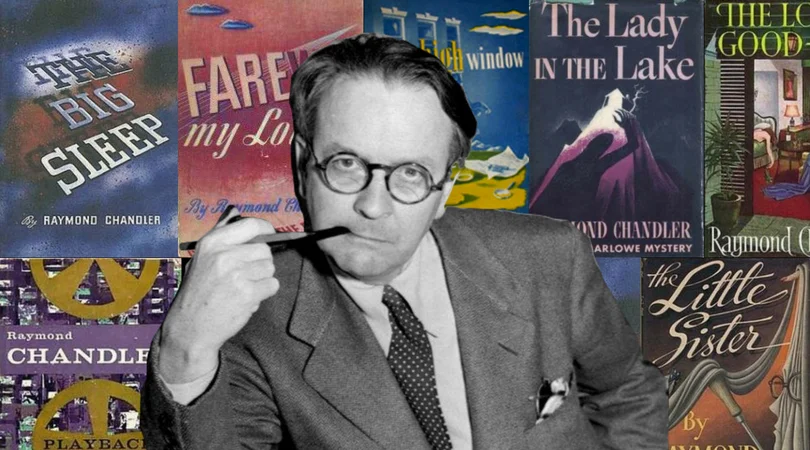
Today marks the 138th birthday of Raymond Chandler, a pivotal figure in American crime fiction known for crafting the archetypal private investigator, Philip Marlowe. Chandler's novels, spanning from The Big Sleep in 1939 to the posthumously released Playback in 1953, delve into the noir underbelly of Los Angeles, filled with complex plots and morally ambiguous characters. In celebration of his legacy, examining the initial criticisms of these works reveals not only the reception of a literary titan but also the evolution of detective fiction itself. Chandler didn't just follow the conventions of his predecessors; he pushed the boundaries, influencing countless authors who sought to emulate his style and thematic depth.
The Big Sleep (1939)
Dead men are heavier than broken hearts.
“Most of the characters in this story are tough; many are nasty, and some are both. Philip Marlowe is hard—hard enough to navigate the slime of the Sternwood family's troubles. Working for a mere $25 a day, Marlowe constantly debates ethical choices against mounting dangers, almost stepping into two murders before the narrative concludes.”
–Isaac Anderson, The New York Times, February 12, 1939
Farewell, My Lovely (1940)
It was a blonde. A blonde to make a bishop kick a hole in a stained-glass window.
“This narrative is intense and tough, teeming with confusing incidents and characters. As Marlowe embarks on his daunting quest, the backstory conflicts with his immediate challenges, reflecting on police corruption and the brutality of human nature, a theme Chandler expertly navigates.”
–Isaac Anderson, The New York Times, November 17, 1940
The High Window (1942)
She had eyes like strange sins.
“Readers will find the characters finely etched, particularly the formidable Elizabeth Bright Murdock, who presents Marlowe with a perplexing case. A sense of melancholy permeates the plot, contrasting with the stark reality of the murders that lie at its core, marking a shift into deeper emotional territories.”
–The Montreal Gazette, September 26, 1942
The Lady in the Lake (1943)
I’m all done with hating you. It’s all washed out of me.
“Chandler builds complex tensions around a series of unsettling murders. The characters are vividly depicted, making them resonate with authenticity. This novel solidifies Chandler's reputation as an author who captures both action and psychological allure in detective fiction.”
–Ray Gould, The Montgomery Advertiser, December 5, 1943
The Little Sister (1949)
She smelled the way the Taj Mahal looks by moonlight.
“In this entry, Chandler skillfully weaves the glamorous and the seedy, presenting Marlowe as he navigates a world where movie stars and gangsters mingle. This tension between different worlds encapsulates the essence of a noir classic.”
–The Arizona Republic, October 2, 1949
The Long Goodbye (1953)
The French have a phrase for it. The bastards have a phrase for everything and they are always right.
“Chandler’s latest novel offers a poignant exploration of the emotional and psychological landscapes surrounding Marlowe. While it deviates from crime-fueled action, the dialogue remains sharp, and the storytelling adept, showcasing Chandler's breadth as a writer.”
–Anthony Boucher, The New York Times, April 25, 1954
Playback (1959)
I’m not a young man. I’m old, tired and full of no coffee.
“In this work, Chandler offers familiarity for his readers with a typical Marlowe setup. Yet as the story unfolds, it raises questions about identity and the complexity of modern life, ensuring that even as times change, Marlowe remains a captivating figure.”
–The Age, April 11, 1959
Implications of Chandler's Work
Chandler's impact on crime fiction extends well beyond his lifetime. His insights into moral ambiguity and personal conflict resonate through contemporary literature. Each novel doesn't just serve as a story; it challenges the traditional boundaries of character and plot, depicting a world where justice is often shrouded in complexity. For anyone examining this genre, the significance of Chandler's work is plain. The blend of gritty reality and intricate plots paved the way for later authors who would similarly explore the darker aspects of human nature. If you're working in this space, consider how Chandler's approach continues to shape narratives today. From psychological thrillers to modern detective stories, the fingerprints of Chandler's storytelling can be found in countless modern works.
A version of this post was published in 2018
Discussion
Sign in to join the discussion.