After years of injury-free sport, a 38-year-old athlete faces a wave of setbacks and learns why staying active may require new habits and better body care.
marathons and trail races to
triathlons, 24-hour relays, mud runs, obstacle races and
Hyrox. Mostly for fun; occasionally for the rent.
For decades, my injury list amounted to one torn meniscus. I earned that in a promotional-event basketball game, trying a dunk well beyond my ability on a lowered rim. The surgeon removed damaged tissue from my knee. I wish he could’ve taken the memory, too. I think I was wearing jeans.
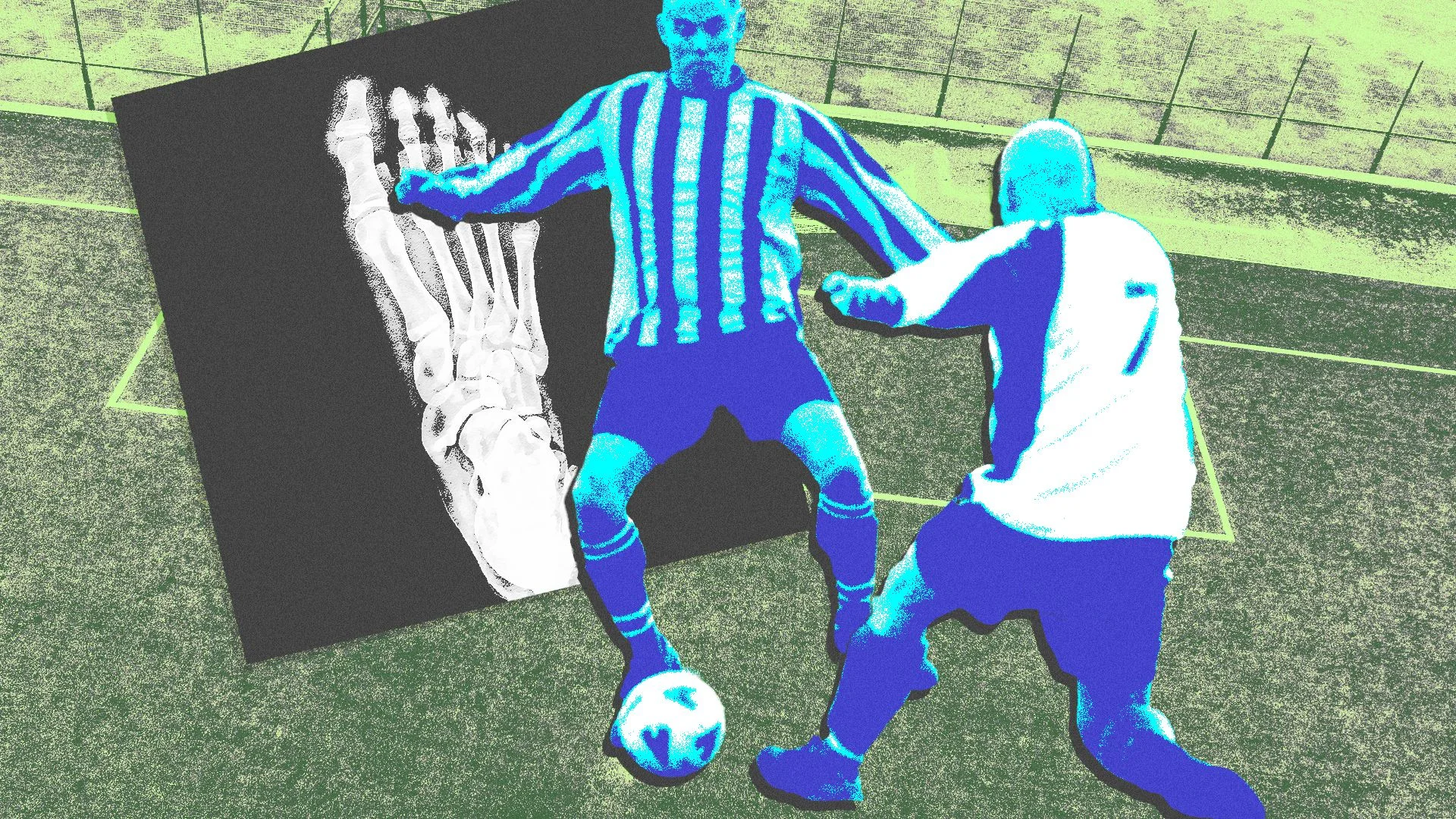
Then came a stress fracture in my foot. I noticed it while lying in bed and couldn’t say when it had happened; three months in a walking boot followed. A hamstring tear came next, during an ordinary pickup football game. I assumed I’d pulled the muscle and kept playing, turning what might have been a smaller problem into six months out. A strained calf during an easy run-club session and then shin splints rounded out the run of bad luck. I’ve lost track of how long the shin splints kept me away.
All of that happened over roughly two years, with one injury seeming to hand off to the next. I was miserable, and baffled. My exercise routine,
diet,
supplements and
sleep habits hadn’t changed. Yet my body seemed to have rewritten the rules.
People joke that
age catches up with you. That’s different from feeling it happen. It can be a grim, almost existential adjustment. I asked my veteran soccer teammates how they avoid or handle injuries as the years pile up.
Kevin, 40, had the bluntest answer: “There’s no avoiding, mate. Just managing.”
Chris, 35, has recurring trouble with his quadratus lumborum, or QL, muscle. He’s taken up yoga, which he says helps his
mobility and
lower back. He’d hesitated because yoga reminded him of the kind of exercise his mum might do. Getting older, he says, has meant accepting that caring for your body can involve activities you once filed under “for a different generation.”
Brian, who recently turned 42, argues for staying active. He remembers a manager in his late 30s, retired from playing, running before a team practice. When younger players teased him about a comeback, the manager replied: “If you stop moving at my age, you won't be able to start again.” Brian still thinks that’s sound advice.
Age matters, but so does the way you live
The reassurance is that aging athletes don’t have exclusive rights to injuries. The less comforting point is that the odds of soft-tissue problems rise as
muscles lose strength and elasticity. Dr. Brian Forsythe, a sports medicine surgeon, associate professor at Rush University Medical Center and recreational soccer player, says athletes at every level eventually encounter many of the same problems. He is also head orthopedic officer for MLS’s Chicago Fire FC and president of the Professional Soccer Physicians Society.
You can’t stop time, but you can influence how much it limits you. The difference may be whether you stop playing or stay involved for another 10, 20 or even 30 years. Forsythe says that starts with taking stock of how your life now compares with your habits at 17 or 18. A few pints can interfere with
recovery and
protein synthesis; carrying excess weight adds stress to joints and increases rotational torque. His point isn’t that you must return to your teenage body. It’s that your expectations should reflect your current one—and that you can still do a lot.
Five ways to reduce your injury risk
Spend less time sitting
General conditioning matters, Forsythe says. If you’re largely sedentary during the week and ask your body to sprint, twist and tackle on the weekend, the jump in workload can be a problem.
Sports medicine physician
Dr. Alex McDonald says many injuries stem from the mismatch between weekday inactivity and weekend intensity. For Dr. James B. Chen, an orthopedic surgeon at
DISC Sports and Spine Center, the bigger risk isn’t necessarily your age. “The biggest risk isn't necessarily your age, but your schedule.”
Get your weight under control
Forsythe says many people in their teens and twenties are closer to their
ideal body weight, or IBW: the weight at which the body can function efficiently without an elevated injury risk. Extra pounds raise the forces on joints, he says. At the knee, those forces can reach as much as six times body weight. That pressure can help explain why someone carrying extra weight might feel pain at the front of the knee while walking up or down stairs.
Train for the sport you actually play
A couple of easy miles each week may build a running base, but they won’t prepare you for every movement in a game. Forsythe recommends training for the demands of your sport: quick changes of direction, acceleration, stopping, pivots and turns. Revisit the drills you did when you were younger, then adapt them to the sport and the body you have now.
Make time to warm up
A thorough warm-up before a game or demanding athletic session is a must, Forsythe says. Professional players often spend 30 to 45 minutes preparing before a match. Soccer players can use FIFA’s injury-prevention program,
FIFA 11+. McDonald describes it as a free, roughly 20-minute routine of running drills, strength and balance exercises, and landing work, including Nordic hamstring curls and single-leg balance. It has been shown to reduce injuries by about a third, he says, provided players do it at least twice weekly—and ideally three or four times.
Stretching can be part of the preparation, but don’t force it. Forsythe warns that aggressive stretching can make muscle-tendon injuries more likely. Warm up first and stretch only within a comfortable range; the moments before a match aren’t the time to try to fix chronically tight hamstrings.
Give injuries and recovery the time they need
Sitting out can feel worse than the injury, which is why players often return too soon. Chen says that resuming sport-specific activity before a minor sprain or strain has healed can aggravate it or lead to another injury. A couple of weeks on the sidelines with a hamstring strain may be frustrating. A tear can cost much more time—I know.
As you get into your 30s and 40s, you may also need longer to recover between games and training sessions. Forsythe says good
cardiovascular fitness can make you feel ready to play on consecutive days, even when your
muscles and connective tissue haven’t recovered. McDonald’s advice is to respect fatigue and make recovery part of the plan.
Most of this is sensible at any age. The catch is that it can take years to listen. Brian ended his message with a point that rings true: one advantage of playing in your 30s and 40s is knowing your body better. “You understand what it's saying to you now. You might not have even listened when you were 21!”
A version of this story appeared in British GQ.
Discussion
Sign in to join the discussion.