Cherokee returns with a five-style leather capsule, direct online sales and a spring 2027 wholesale rollout at select independent retailers.
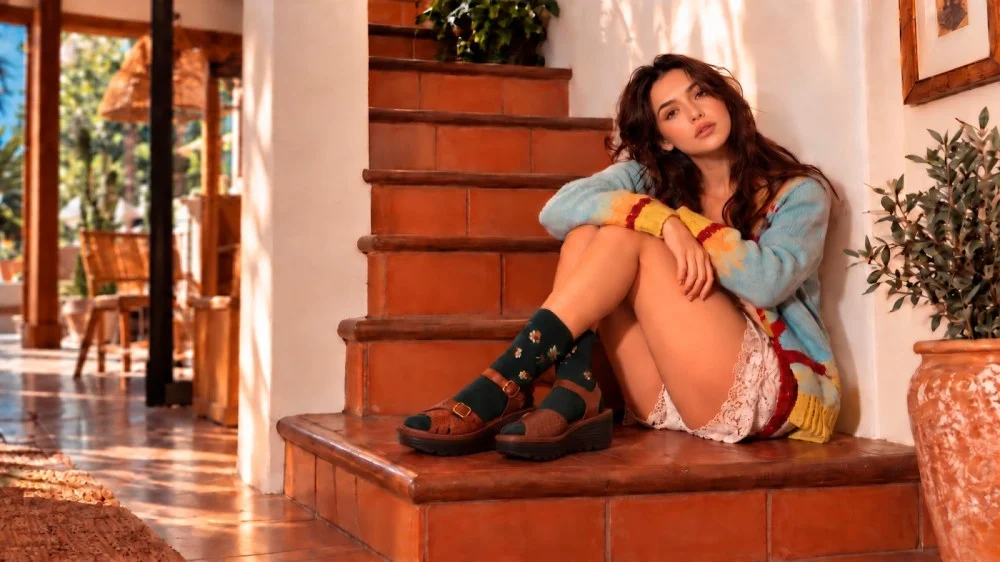
A return built around footwear
Cherokee’s return to footwear starts with a focused proposition: revive the brand through the product category that built it, then expand distribution deliberately. The first capsule arrives on the company’s website Dec. 1, with wholesale sales to a select group of independent retailers planned for spring 2027. Prices range from $160 to $290 per pair, placing the launch in a price band that asks customers to care about materials and construction as well as the name on the shoe.
That sequence gives Cherokee time to reintroduce the product before asking a larger network of stores to carry it. The company is betting that its history still means something to shoppers, but heritage alone can’t establish demand. The shoes will have to make the case in person and online, where comfort, fit, durability and price all shape whether a familiar brand becomes a current purchase.
A five-style return
The capsule comprises five familiar designs: the Stephanie Mid Beep, Jenny with a Buckle, Gabrielle High Beep, Stevie High Beep and Diana Mid Beep. Each is made from unlined vachetta leather in a whiskey shade, then hand-washed and stained with natural vegetable dyes. Cherokee says the artisanal process has remained unchanged since the 1970s, giving the launch a direct link to the way the company made its footwear in its earlier years.
The material and finish provide a consistent identity across the five styles. A shared leather treatment can make a capsule feel coherent, though it also means the range's appeal will depend on whether shoppers respond to that particular look and feel. Cherokee is starting with a defined point of view rather than a broad assortment.
The initial retail group includes Harry’s Shoes in New York, Benjamin Lovell in Philadelphia, Triple M Boutique in Franklin, Tennessee, and Beck’s in California. Starting with a small number of independent stores gives the relaunch a contained route to market while the brand establishes its offer with current customers. Independent retailers can also give a product more direct attention than a large, crowded sales floor, though this limited footprint will reach fewer shoppers at first.
Back to the founder’s footwear roots
Founder Jim Argyropoulos reacquired Cherokee during the COVID-19 pandemic. His path to the brand began in his father’s shoe repair shop in Chicago, then continued with his own shop and a custom sandal business in Venice, California. That operation grew into Cherokee in 1972, making footwear the company’s starting point rather than a later extension of an apparel business.
Argyropoulos recalled that retailers first approached him after seeing his shoes on customers. He began producing them in a garage beside his Venice shop. “We had our own factories making everything,” he said. At the business’s peak, he said, production reached 10,000 pairs a day in Los Angeles. That history explains why the current launch is framed as a return to the source: footwear is where Cherokee’s early customer demand and manufacturing identity took shape.
Cherokee was incorporated in 1973 and spent its first nine or ten years focused on footwear. Handbags followed around 1980, then apparel. Argyropoulos took the company public in 1983. By 1988, he said, wholesale sales were about $400 million a year, equivalent to roughly $800 million at retail. Those figures describe a much larger business than the one now being introduced, but they also show how far the brand once extended beyond a small shoe operation.
A tighter model for the relaunch
After Argyropoulos left, a leveraged buyout saddled the company with debt. He said the subsequent owner sold Cherokee through a broad mix of retailers, from Nordstrom and Bloomingdale’s to Mervyn’s, while discount pricing and branded-business costs created problems. Cherokee entered bankruptcy protection in 1993, reorganized, and filed again in 1994. A later license put the brand in Target stores; that U.S. agreement ended Jan. 31, 2017, after Target chose not to renew.
The history offers a practical warning for the current effort: wider distribution can bring reach, but it doesn't guarantee a healthy business. Cherokee’s past difficulties involved the costs and pricing attached to a large retail operation, according to Argyropoulos. The new plan appears narrower by design, with a small wholesale group and a direct website launch. This is more significant than it looks. The number of stores is part of the strategy, not simply a measure of how quickly the brand can expand.
For the comeback, Argyropoulos wants to rebuild from footwear, following the approach he took at the start. He brought in James Rowley as general manager. Rowley’s past leadership roles include Kork-Ease, HH Brown and Geox; he most recently served as president of Mephisto USA. His footwear background gives the relaunch an experienced operator, while Argyropoulos supplies a connection to Cherokee’s founding period.
Argyropoulos said he wants the shoes to retain Cherokee’s recognizable feel, comfort and quality while serving today’s customer. The plan, he said, isn’t to chase trends. That’s a clear positioning choice, but it leaves the company with a harder test: a longstanding design language has to feel relevant to people who may not remember the original brand. Familiarity can help, but it can't replace a product that earns repeat wear.
Production is based in Mexico, where the shoes are made by hand. Rowley described the arrangement as nearshoring, which lets the team reach its factory “in an afternoon” if needed. Argyropoulos said Cherokee had already worked with Mexican factories in the 1980s, including for shoe uppers; the current factory can produce 2,000 to 3,000 pairs daily.
That production capacity is larger than the launch itself needs to prove. What matters initially is whether the company can match its materials and construction claims with consistent quality while keeping production aligned with demand. A nearby factory may make communication and visits easier, but it doesn't settle those questions on its own.
The construction also draws on Cherokee’s history. Rowley said the relaunch uses California construction, also known as Opanka: the upper, insole and outsole are hand-sewn together, with stitching visible along the shoe’s side. The Dec. 1 capsule will show whether that combination of heritage techniques, accessible wholesale scale and a narrower retail rollout can give Cherokee a durable foothold again.
What the launch will have to prove
For shoppers, the most immediate question is whether the five styles justify their prices through fit, comfort and finish. If you're working in footwear retail, the other question is whether the brand’s story gives customers a reason to choose Cherokee over the many labels competing for attention. The launch offers a focused answer: distinctive leather, hand-sewn construction and a connection to the company’s original business. A focused answer, though, still has to meet the customer at the point of sale.
And yet, Cherokee isn't trying to rebuild its former scale in one step. The website launch and selected independent accounts make the first phase easier to observe: which designs attract attention, how the product performs with buyers, and whether the brand can support a larger wholesale presence. (And this is the part most people overlook.) A relaunch can be judged by more than its opening assortment; its pace and discipline matter too.
For now, Cherokee is selling a return to a product category with a real history behind it. The brand has a name, a founder with firsthand experience, and a production approach that draws on earlier methods. The evidence that counts will come from how well those elements translate into shoes customers want to wear—and buy again.
Discussion
Sign in to join the discussion.